
Mumbai Police have arrested two suspects in connection with the shooting of Sameer Sheikh, son of alleged gangster Asif Dadi, who was reportedly linked to the Dawood Ibrahim gang.

Thane police have solved the murder of a Mumbai-based tailor within 48 hours, arresting two men after discovering the victim was killed over an unpaid loan of Rs 3 lakh. The method of tying the victim provided a crucial clue to investigators.

Among the many reasons to watch Murder In Mahim is that it may be a chance to wipe out -- if it is achievable by a Web series -- the air of judgment towards those who do not conform to the majority's idea of normal, asserts Deepa Gahlot.

Nineteen years later, remembering how terror struck Mumbai's lifeline on July 11, 2006.

According to Kamra, an artist is left with only two choices under such circumstances. "Sell their soul and become a dollar puppet or wither in silence. This isn't just a playbook, it's a political weapon. A silencing machine," he wrote.

Or has the world seen things like this before, asks Ajit Balakrishnan.

The National Investigation Agency has arrested two close aides of gangster Chhota Shakeel for allegedly handling the illegal activities and financial transactions of the crime syndicate controlled by fugitive underworld don Dawood Ibrahim, and for indulging in terror financing in the western suburbs of Mumbai, an official said on Friday.
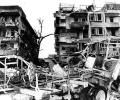
'The entire idea behind the serial bomb blasts was to strike fear in the minds of Indians.' 'I don't think the blasts were targeted to derail the Indian economy; the idea behind the blasts was retribution.'

Nine years after seven RDX bombs kept in Mumbai suburban trains exploded killing 188 people, a Special Maharashtra Control of Organised Crime Act court is likely to pronounce its verdict on Friday.

Syed Firdaus Ashraf walks the streets of Mahim, where Yakub Memon grew up and lived till the day before the serial blasts in 1993, on the day Yakub was hanged and discovers an undercurrent of unease and restrained anger.

The case took a twist when the defence lawyer sought to call Indian Mujahideen co-founder Sadiq Sheikh as a defence witness after he told the police in 2008 that IM members were responsible for all the blasts that had occurred in India since 2005 including the July 11, 2006 train blasts.

Seven years after the Mumbai serial train blasts in which nearly 200 people were killed and over 700 injured, the trial in the case is still going on with the special Maharashtra Control of Organised Crime Act court recording the statements of the accused. "The court is now recording the statement of the accused who wanted to depose as a defence witness in the case," said advocate Sherif Sheikh, appearing for some of the accused in the case

Lakdawala was apprehended by Mumbai Crime Branch's anti-extortion cell team at the International Airport. He once worked for underworld don Dawood Ibrahim before forming his own gang.
"Considering their role, eight convicts deserve death penalty," the prosecution told the court.

Ethesham Siddiqui (31), lodged in Central Jail at Arthur Road in Mumbai, has also done certificate courses in Urdu, Arabic languages and Human Rights, according to a lawyer from Jamiat-ul-Ulema, which is providing free legal aid to Ethesham and some others accused.

Pronouncing the verdict, the special Maharashtra Control of Organised Crime Act (MCOCA) court judge Yatin Shinde sentenced to death Faisal Sheikh, Asif Khan, Kamal Ansari, Ehtesham Sidduqui and Naveed Khan who planted the bombs in various trains.

One accused was acquitted by the court.

A Special MCOCA court has convicted 12 of the 13 accused in the July 11, 2006 Mumbai suburban train bombings in which 188 people were killed.
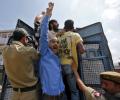
'The nation State can thrive if all communities believe they have a stake in it; that their interests will be safeguarded; that there will be no discrimination; that there will be justice.' 'The political leadership of this country needs to decide whether it wants to mitigate these challenges to the nation by making necessary correction or whether it wants to ignore these questions that Yakub's noose has left behind,' says Ankur Bhardwaj.

Syed Firdaus Ashraf explains how two cases separated by ideological motives were curiously similar on one account.

Stoking a controversy, Congress leader Digvijay Singh on said the credibility of government and judiciary was at stake after the "urgency" shown in Yakub Memon's case while his party MP Shashi Tharoor questioned the efficacy of death sentence in serving as a deterrent.

'There are moments, and the hanging of Yakub Memon was one, where all of the gathered injustices are crystallised. Those gathered at the graveyard were not there to protest. They came to sympathise because they are also victims,' says Aakar Patel.

Back in 2007, Rediff.com's Sheela Bhatt had profiled Yakub after he was sentenced to death by the Terrorist and Disruptive Actives (Prevention) Act court for criminal conspiracy and financing air tickets to send co-conspirators for arms and RDX training to Pakistan.
Back in 2007, Rediff.com's Sheela Bhatt had profiled Yakub after he was sentenced to death by the Terrorist and Disruptive Actives (Prevention) Act court for criminal conspiracy and financing air tickets to send co-conspirators for arms and RDX training to Pakistan.
